

Jenna Piersol’s journey to Augusta County began on an urban sidewalk outside a free health clinic in Richmond, Virginia. For five years, she’d worked on programs serving extremely ill patients, helping them balance multiple medications while attempting to minimize hospitalizations. Care work was a lifelong calling, but she was beginning to long for a transition from managing acute illnesses to proactive prevention. She wanted a way to help others cultivate a deeper and sustainable wellness.
As she stepped out of the office and into the sunlight, she remembers feeling the disconnect as surely as she felt the spring air’s warmth. “I was working in a health organization, feeling unhealthy. I was ready to make a change.”
Food & Farming is Medicine We Need
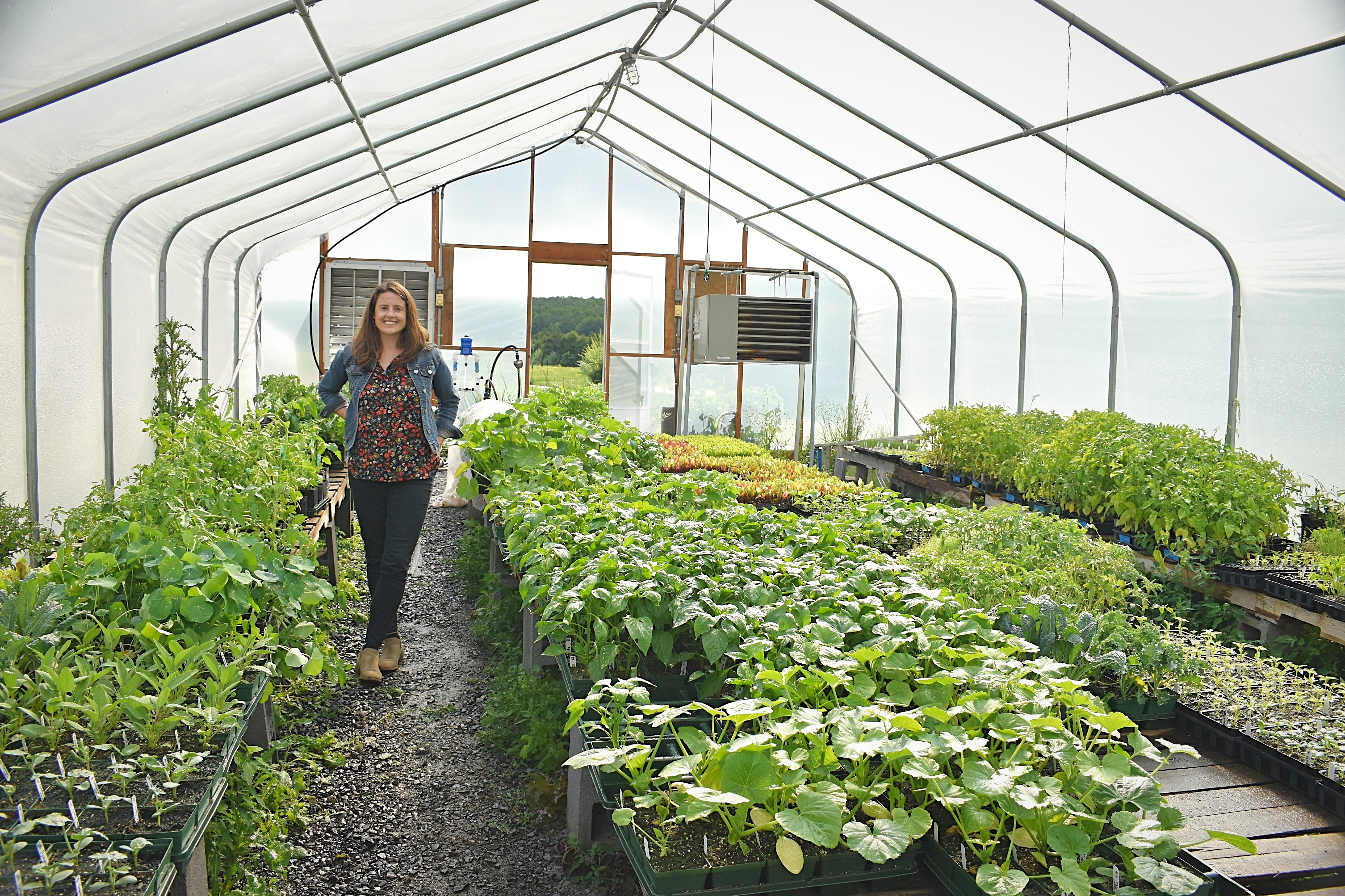
A bicycle ride across Europe, a year of studying permaculture food production on Appalachian ridge tops, and a lot of dirt farming and grant writing later, Jenna Piersol runs Project GROWS, a local nonprofit dedicated to improving the health of children through garden-based education and access to nourishing food.
Serving more than 5,000 children each year, she’s grown with the organization from its first season of tomatoes to its growing number of greenhouses and outdoor classrooms, moving from visitor to fellow to Executive Director. Over those seven years, she’s seen children’s attitudes towards food and health transform. Initially arriving at the farm unable to explain where food comes from, their questions have shifted. After returning for seasons of hands-on growing and interactive taste tests, students who had never before eaten fresh vegetables bring new questions home to their parents: Can we cook this too? Why does this food taste so good? Can I have more please?
Community partnerships around affordability, education, and access mean that Jenna and Project GROWS are also working to empower parents, providing them with answers to these questions in ways that nourish and sustain.
Raising Children to Love the Land
“Wanting to have children was my primary reason for wanting a farm,” says Jenna. “I wanted to give them that seed, to pass on a sense of wonder.”
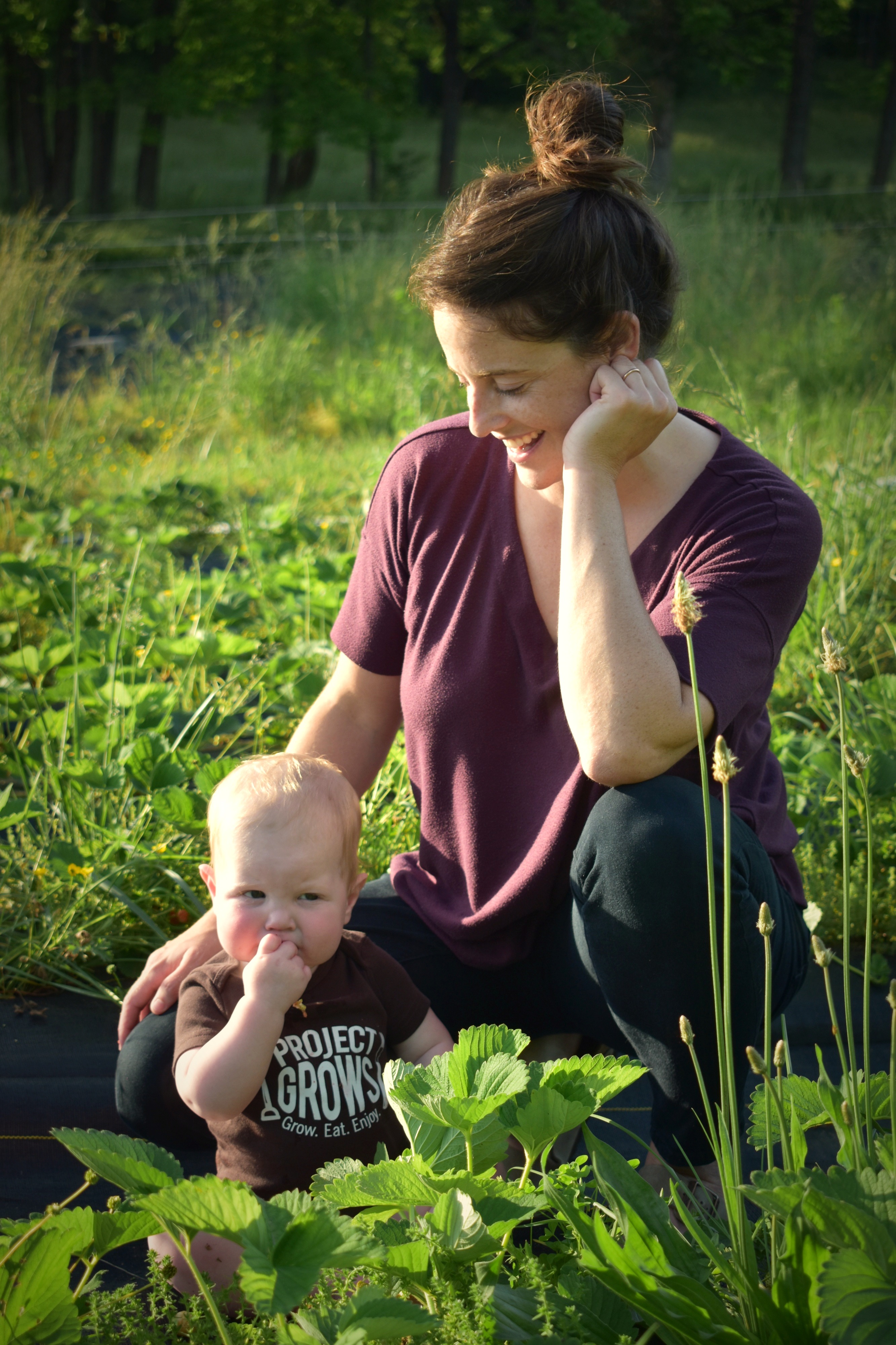
Jenna’s decision to invest in the growth and flourishing of Project GROWS mirrored her family’s decision to root down in Augusta County. While the days find Jenna in the role of community changemaker, the evenings bring her back home to Wild Rose Orchard, where she is launching a pick-your-own permaculture orchard with her husband Trevor Piersol and their nine-month old son, Afton.
With the vision to start a family raised on, fed from, and in love with the land, Jenna laughs at her occasional overshoot of success. “I can’t get Afton to eat a strawberry from a bowl,” she shares, alight with one part pride and one part amused frustration. “He only wants berries straight from the plant!”
“It has always been a goal to live more simply and closer to the land,” she says. “Having Afton means we have really been able to slow down and enjoy the land — listen to the bluebirds, see the hawks, hear the peepers, just walk around in our woods. I never get tired of passing by the rolling mountains and the quilting clouds. Honestly, I can’t even imagine getting tired of that.”
Rural Community; Real Impact
With bold visions to transform food, education, and wellness, visitors from larger cities might be tempted to suggest that Jenna’s changemaking agenda could find a better reception in a more urban setting. Jenna remains untempted: “From the outside, it’s easy to miss all that’s going on. But when you live here, there are endless ways to get your hands in the dirt, literally and figuratively.”
The Project GROWS farm sits a mere five miles from downtown Staunton, where Jenna says she attends art shows and farm-to-table restaurants bridging the urban-rural gap. The Staunton Innovation Hub, where her offices are housed, offers networking, support, and inspiration for entrepreneurs.
Most compellingly, she views her rural setting and her love of place as integral parts of her dreams for family and vocation: “The rural context is huge for me, because I’m interested in the community aspect. I have more intergenerational friendships. There’s greater opportunity to experiment. With less specialization, I can build broader partnerships.”
Gazing out over raised beds prepped for an upcoming season of tiny hands and eager explorations, this renaissance woman in boots puts it succinctly: “Here, there is an unlimited potential to be a part of change.”